
Graphite Qualification

Developing industry guidance for graphite in nuclear applications

Gas-cooled reactor designs rely on graphite for its nuclear, thermal, and chemical performance. These properties vary by graphite grade, manufacturing process, and service history. As a result, graphite qualification requires experimental data and modeling to demonstrate safety and performance throughout a component’s intended service life.

The ART-GCR Graphite Qualification program integrates irradiation testing, material characterization, modeling, and standards engagement to support licensing-relevant use of graphite in advanced reactor designs for reactor designers and graphite manufacturers.

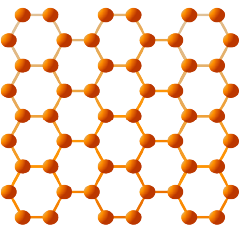
Graphene pzlane (A)

The basal planes of graphite are chemically inert, while edge sites are more reactive under oxidizing conditions.
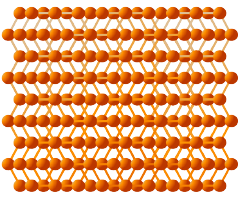
Crystallite (A to nm)

Defects within crystallites are shielded from oxidation until basal plane edges recede.

Crystallites randomly oriented in microstructure (nm) 

Oxidation is further limited by the local orientation of crystallites at the gas–solid interface, which influences the accessibility of reactive sites.

Microstructure (μm to mm)

Local crystallite orientation and pore structure affect oxygen transport and oxidation rates within graphite components.
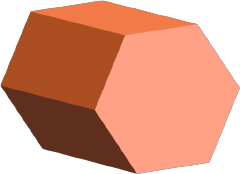
Component scale (cm to m)

In many cases, oxidation is limited to a shallow surface layer, with deeper material remaining unaffected.
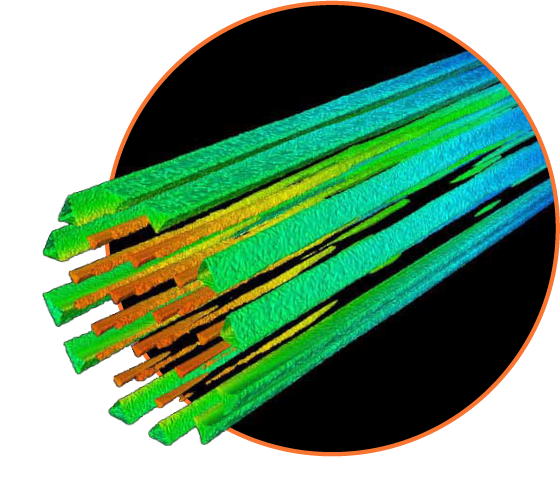
Graphite aualification areas of focus

Irradiation experiments

Irradiation experiments (e.g., AGC and HDG) to quantify graphite behavior under reactor-relevant conditions, with capsule status and post-irradiation examination (PIE) results captured in NDMAS

Baseline characterization

Measurement of physical, mechanical, and thermal properties of as-manufactured graphite, with test data captured in NDMAS

Microstructural analysis

Imaging and analysis of graphite microstructural features, correlated with graphite grade, fabrication processes, and specimen-specific exposure histories

Graphite performance modeling

Modeling approaches to project graphite behavior based on empirical data and relevant physical mechanisms

Oxidation

Evaluation of graphite oxidation rates and consequences under acute and chronic exposure to oxidizing environments (Oxidation rate data will be captured in NDMAS as it becomes available.)

Molten salt interactions

Investigation of tribology, salt permeation, and chemical and physical effects of molten salt–graphite environments, with and without irradiation

NDMAS external database

Graphite qualification data generated under the ART-GCR program are curated and made available through the Nuclear Data Management and Analysis System (NDMAS). This authoritative data repository for experimental and analytical results supports nuclear fuel and materials research conducted at the Idaho National Laboratory.

For graphite qualification, NDMAS provides access-controlled tools that enable qualified users to visualize, analyze, and download data associated with irradiation experiments, material characterization, and related testing activities. These data support industry design efforts, research applications, and regulatory evaluations by preserving traceable, quality-assured datasets over the full life cycle of the program.

Access to specific datasets is managed to ensure appropriate use while enabling collaboration with researchers, industry partners, and other stakeholders.

International consensus-building and collaborations

Graphite qualification activities are coordinated with national and international standards organizations and research partners to support consistent, consensus-based guidance for nuclear applications. Engagements include the following:

  • ASME Code and ASTM standards development
  • Generation IV International Forum (GIF) activities
  • IAEA-coordinated research programs
  • INGSM and international carbon conferences
  • Bilateral collaborations with the United Kingdom, South Korea, and other partners