
Molten salt interactions
Understanding molten salt interactions with graphite
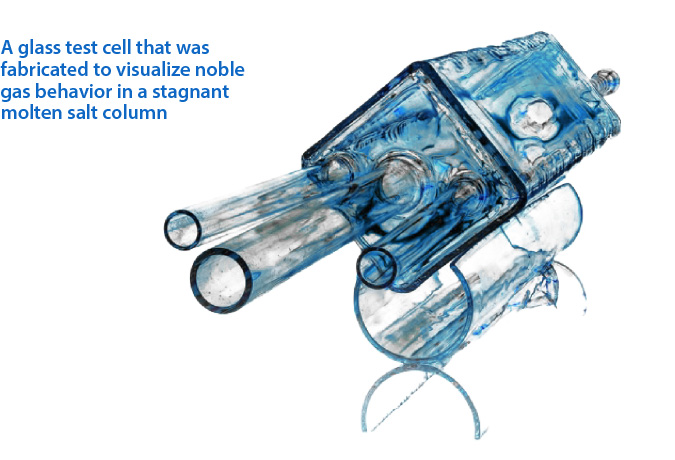
Molten salt interactions refer to the physical, chemical and thermodynamic processes that occur when nuclear-grade graphite contacts molten salts at elevated temperatures. Understanding these interactions supports evaluating graphite material performance, compatibility, and durability in advanced energy systems and experimental environments where salt exposure may occur.
Source: ORNL
Experimental capabilities and testing
Experimental studies of molten salt–graphite interactions are conducted using specialized test systems designed to isolate graphite behavior and generate qualification-relevant data.
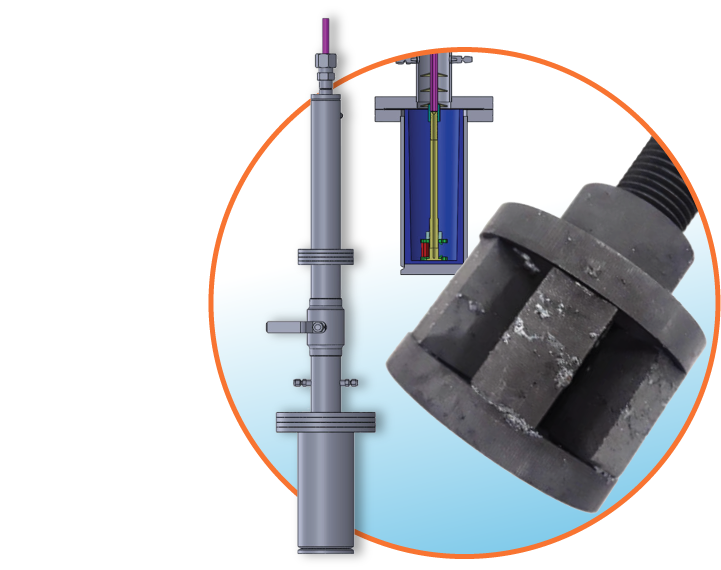
Oak Ridge National Laboratory’s (ORNL) Salt Intrusion System enables controlled exposure of graphite samples to molten salts under representative conditions:
- Operates at pressures up to 10 bar and temperatures of at least 750°C.
- Accommodates up to six graphite samples per test.
- Initial testing has been conducted using FLiNaK salt.
- No metallic materials contact the salt during the test—only graphite
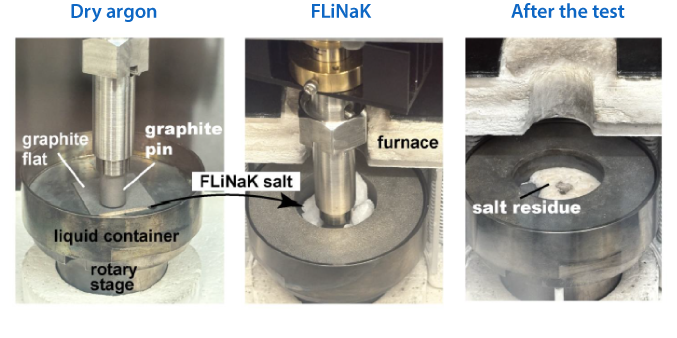
Additionally, ORNL can conduct high-temperature wear tests using FLiNaK salt to assess the long-term effects of tristructural isotropic pebbles moving within molten-salt pebble bed reactors. These tests can be directly compared to inert systems to isolate wear mechanisms specific to molten salt and identify potential issues prior to reactor construction.