International collaborations
Working globally on reactor research
Large international collaborations play a critical role in advancing high-temperature gas-cooled reactor (HTGR) analysis and validation by enabling participating organizations to share experimental data, benchmarks and expertise. These collaborations enable code-to-code and code-to-experiment benchmark exercises to improve confidence in modeling and simulation tools used for reactor design and licensing.
Validating analysis tools for reactor licensing requires access to a broad range of separate-effects and integral-effects experimental data, often generated using large and costly test facilities. Building and operating these facilities can require investments ranging from millions to billions of dollars. As a result, international cooperation is essential for efficiently leveraging existing experiments and reducing duplication of effort.
Several countries currently operate HTGR research reactors, power reactors and supporting experimental facilities, including HTR-10, HTTR and HTR-PM. The International Collaborations component leverages bilateral agreements — such as the Civil Nuclear Energy Research and Development Working Group (CNWG) — and multilateral frameworks, including the Generation IV International Forum (GIF) and the Nuclear Energy Agency (NEA), to share data and experience among organizations with common interests in HTGR technology.
Integrating international datasets into the ART-GCR validation campaign helps optimize resources, accelerate method validation, and strengthen the technical basis used in regulatory evaluations.
GIF Computational Methods, Validation, and Benchmarking (CMVB)
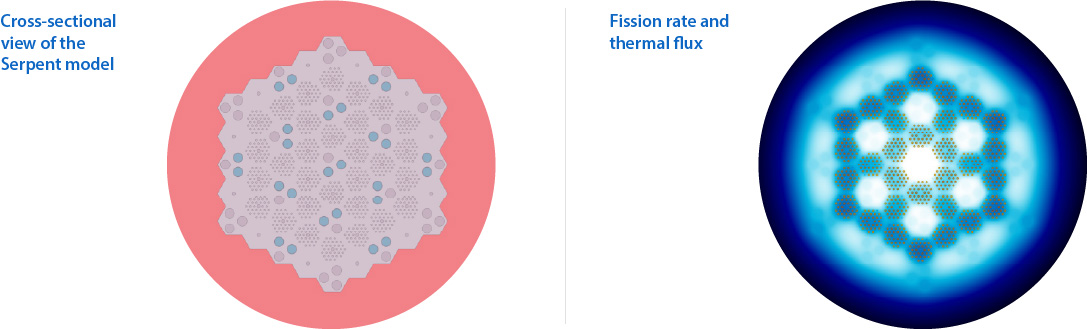
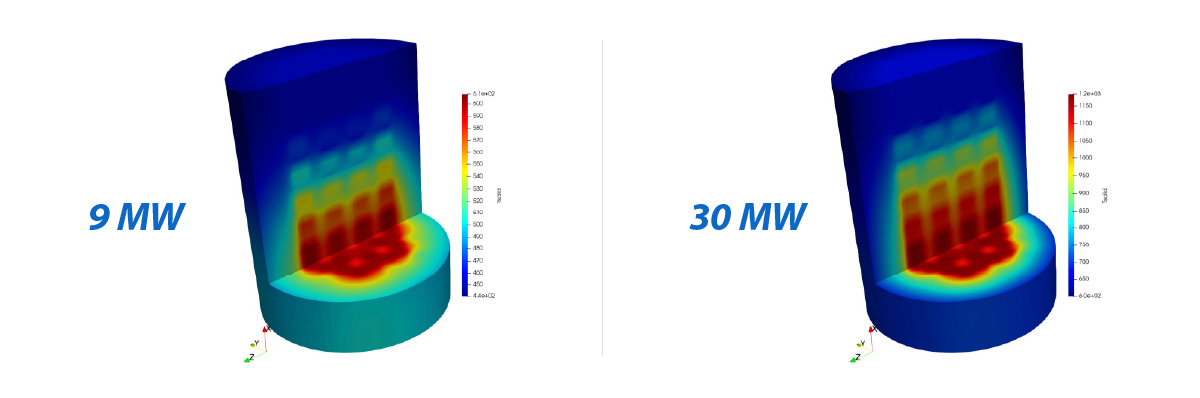
The Generation IV International Forum (GIF) computational methods, validation, and benchmarking (CMVB) activity is an international effort focused on validating simulation tools for HTGR applications. Participating countries contribute experimental data from state-of-the-art facilities to support benchmark problems used in code verification and validation.
Work packages within GIF CMVB address a range of phenomena relevant to HTGR performance, including reactor physics and thermal-hydraulics, and provide a structured framework for international benchmarking and method comparison.
HTTF OECD-NEA Benchmark
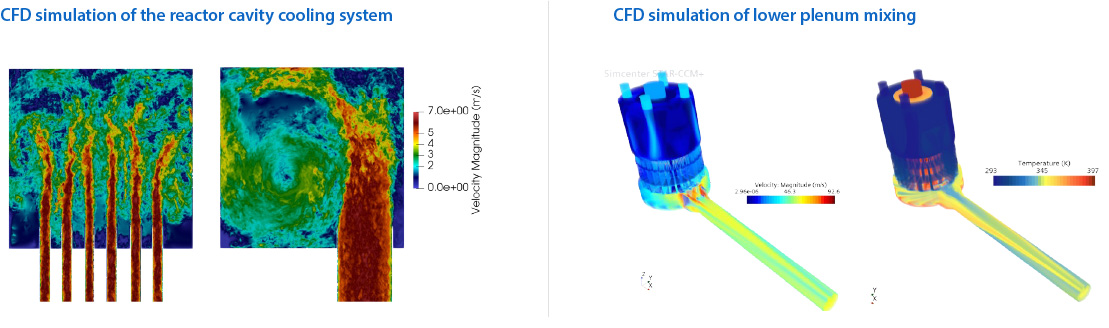
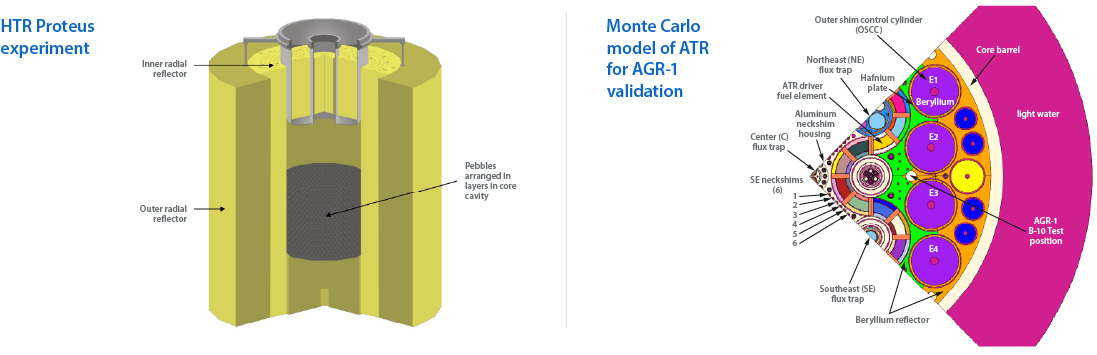
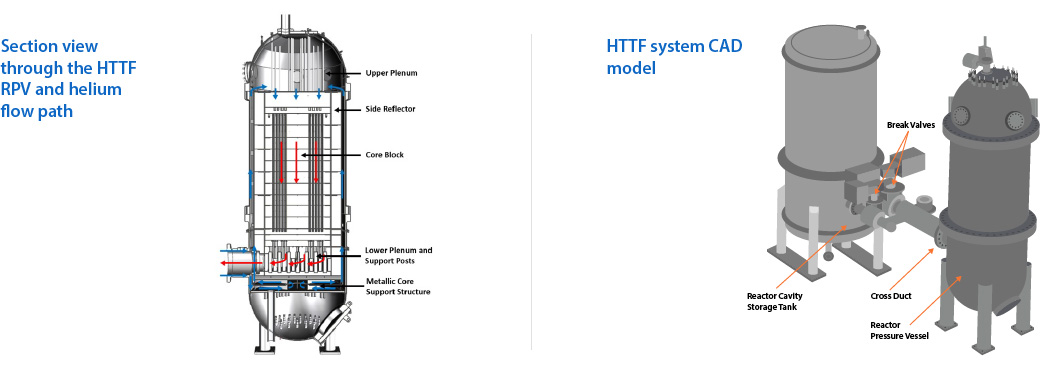
The High Temperature Test Facility (HTTF) OECD–NEA benchmark is conducted under international collaboration frameworks to support validating of HTGR thermal-hydraulic modeling tools. Experimental data generated using HTTF are shared among participating organizations and used as benchmark cases for code-to-experiment comparison.
These benchmark activities contribute to an improved understanding of heat transfer, natural circulation, and system behavior under HTGR-relevant conditions, which supports the validation of analysis tools used in reactor design and safety assessment.
HTTR Loss-of-Forced-Cooling (LOFC) Benchmark
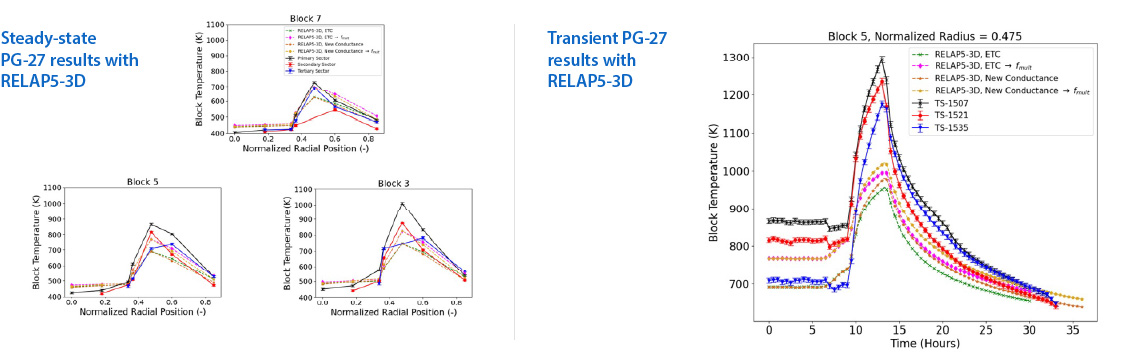
The High Temperature Engineering Test Reactor (HTTR) in Japan is the first and only operating HTGR. Loss-of-Forced-Cooling (LOFC) tests performed at HTTR provide valuable experimental data demonstrating the reactor’s ability to safely shut down and remove heat without inserting control rods.
Under the Civil Nuclear Energy Research and Development Working Group (CNWG) and the Advanced Reactor Technologies program, the HTTR LOFC benchmark uses these experimental results to validate simulation tools for modeling HTGR transient behavior. These benchmark efforts support evaluating passive safety features and improve confidence in analysis methods applied to licensing-relevant scenarios.