
Graphite Qualification
Graphite plays a critical role as a neutron moderator and structural material in gas-cooled reactors, enabling efficient fission while maintaining mechanical and thermal stability. Its performance under high temperature and neutron irradiation is central to safe, long-term reactor operation.
TRISO Fuel Qualification
Tristructural isotropic (TRISO) fuel development and qualification activities generate the data needed to support licensing and operation of high-temperature gas-cooled reactors.
High-Temperature Metals
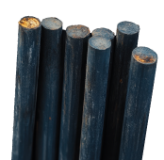
The High-Temperature Metals R&D program develops and qualifies advanced alloys needed to support the design, construction, and licensing of HTGRs and associated plant systems.
Design, Methods, and Validation
This program assesses, verifies, and validates advanced analysis tools and methods to support the safe design, licensing, and operation of HTGRs.
What is a gas-cooled reactor?
High-temperature gas-cooled reactors (HTGRs) are graphite-moderated, tristructural isotropic (TRISO) fuel reactors cooled by helium. In addition to electricity generation, the high outlet temperatures of HTGRs (approximately 700–950°C) make them well suited for industrial applications such as hydrogen, ammonia, and cement production.
HTGRs are typically deployed using a modular approach, which enables multiple smaller reactor units (approximately 50–625 MW) to be constructed at a single site to meet specific power and heat needs. Their small emergency planning zone (EPZ)—generally less than 1 kilometer—enables siting near industrial and chemical facilities.
The inherently low power density of HTGR cores (typically less than 10 W/cm³), combined with a tall, slender core geometry and the high thermal heat capacity of graphite, result in reactor designs with strong passive safety characteristics and excellent fission-product retention in TRISO fuel.
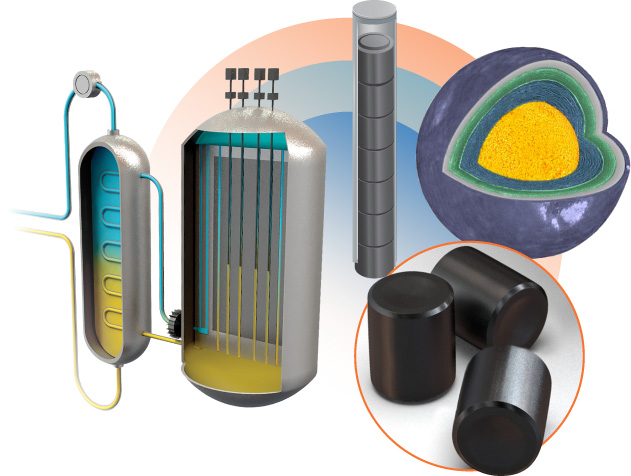
Gas-Cooled Reactors program areas
Program review

Quantity of 135I released from the AGR-1, AGR-2, and AGR-3/4 experiments and discovery of 131I at the FPMS traps during the AGR-3/4 experiment
Quantity of 135I released from the AGR-1, AGR-2, and AGR-3/4 experiments and discovery of 131I at the FPMS traps during the AGR-3/4 experiment

Frequently asked questions
What types of advanced reactors are there?
There is a range of advanced reactor concepts designed to improve safety, efficiency and flexibility. The Generation IV International Forum has identified six advanced reactor systems, including gas-cooled, sodium-cooled, molten salt, lead-cooled, and very high-temperature reactor concepts (www.gen-4.org).
Is a gas-cooled reactor and a high-temperature gas-cooled reactor the same reactor type?
In the United States, the terms gas-cooled reactor and high-temperature gas-cooled reactor are often used interchangeably to describe graphite-moderated, helium-cooled reactors fueled with TRISO fuel.
Internationally, the term HTGR is more commonly used to distinguish these reactors from the advanced gas-cooled reactors operated in the United Kingdom, which use carbon dioxide (CO2) coolant and non-TRISO fuel and can operate at lower outlet temperatures
Why do we use graphite for gas-cooled reactors?
Graphite is used in gas-cooled reactors because it provides neutron moderation, maintains structural integrity at high temperatures, and has a high heat capacity. These properties contribute to reactor stability, passive safety characteristics, and reliable performance under both normal and off-normal conditions.
What about tristructural isotropic fuel and graphite waste?
Reactor graphite waste is typically contaminated with radionuclides, such as carbon-14 and tritium, and is managed through a combination of long-term interim storage, specialized decontamination, and final deep geological disposal. A significant part of the current research focuses on reducing the volume of graphite waste before storage and final disposal.
Tristructural isotropic (TRISO) waste issues are addressed through a combination of specialized, robust, long-term storage solutions, research into advanced reprocessing techniques to reduce the TRISO waste volume, and strategies to separate the fuel kernels from the surrounding graphite matrix. Because TRISO fuel is designed to be highly durable, it often requires different, more intensive methods to break down, compared to conventional nuclear fuel.
What about tristructural isotropic fuel and graphite waste?
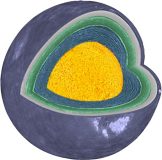
Tristructural isotropic (TRISO) fuel is unique because each fuel particle is individually coated with multiple protective layers that act as a containment system. This design enables TRISO fuel to retain fission products under extreme temperatures and irradiation conditions, contributing significantly to the inherent safety of gas-cooled reactor designs.
ART-GCR laboratories
The ART-GCR program is a collaborative research effort led by Argonne National Laboratory, Idaho National Laboratory, and Oak Ridge National Laboratory.


